Osaka is the Japanese city I would recommend to travelers who want their first trip to feel exciting without becoming exhausting. Tokyo is brilliant but huge. Kyoto is beautiful but can feel crowded and ceremonial. Osaka sits in the middle with food, nightlife, easy trains and enough rough edges to feel like a real city.
Summer adds a twist. It is hot, humid and busy, so a good Osaka itinerary cannot be a heroic checklist. The smartest plan puts outdoor sightseeing in the morning, indoor breaks in the afternoon and food neighborhoods at night, when the city starts to make sense.
Toma is useful for exactly this kind of trip. The app builds personalized AI itineraries around your travel style, then helps you follow the plan during the trip. Afterward, it creates a Travel Wrapped with your best moments, which is a fun fit for a city where half the memories involve food you did not know how to pronounce.
Why Osaka works so well for a first Japan trip
Osaka is not just “Tokyo but cheaper” or “Kyoto with better food.” It has its own personality. The city is direct, busy, funny and deeply proud of its kitchen. You come here for takoyaki, okonomiyaki, kushikatsu, late-night ramen, department store food halls and neighborhoods that feel alive after dark.
It also works logistically. Kansai International Airport connects well to the city, the subway is manageable, and Kyoto, Nara, Kobe and Himeji are all realistic day trips. That makes Osaka a strong base if you want one hotel and several different experiences.
The tradeoff is that summer requires discipline. You will enjoy the city more if you avoid walking for six straight hours in the middle of the day. Build in air-conditioned breaks, use trains generously and treat dinner as the main event.
Where to stay: Namba, Umeda or somewhere quieter
For a first trip, Namba is the easiest choice if you want food, nightlife and short walks to Dotonbori. It is lively, central and convenient, but it can feel intense at night. If you want to step outside and immediately have dinner options, stay here.
Umeda is better if you care about trains, shopping and a slightly more polished base. It is connected to major rail lines, useful for day trips and full of malls, underground passages and restaurants. The downside is that it can feel less atmospheric than Namba.
Honmachi and Kitahama are good middle-ground options. They are quieter, still central and often more comfortable for travelers who want sleep more than neon. If I were planning a 4-day summer trip, I would choose Namba for a first visit with energy, Umeda for day-trip convenience, and Kitahama for a calmer base.
Day 1: Namba, Dotonbori and your first Osaka dinner
Keep the first day light. After airport transfers, hotel check-in and jet lag, you do not need a full sightseeing plan. Start with Namba, walk toward Dotonbori and let the city introduce itself through signs, bridges, smells and crowds.
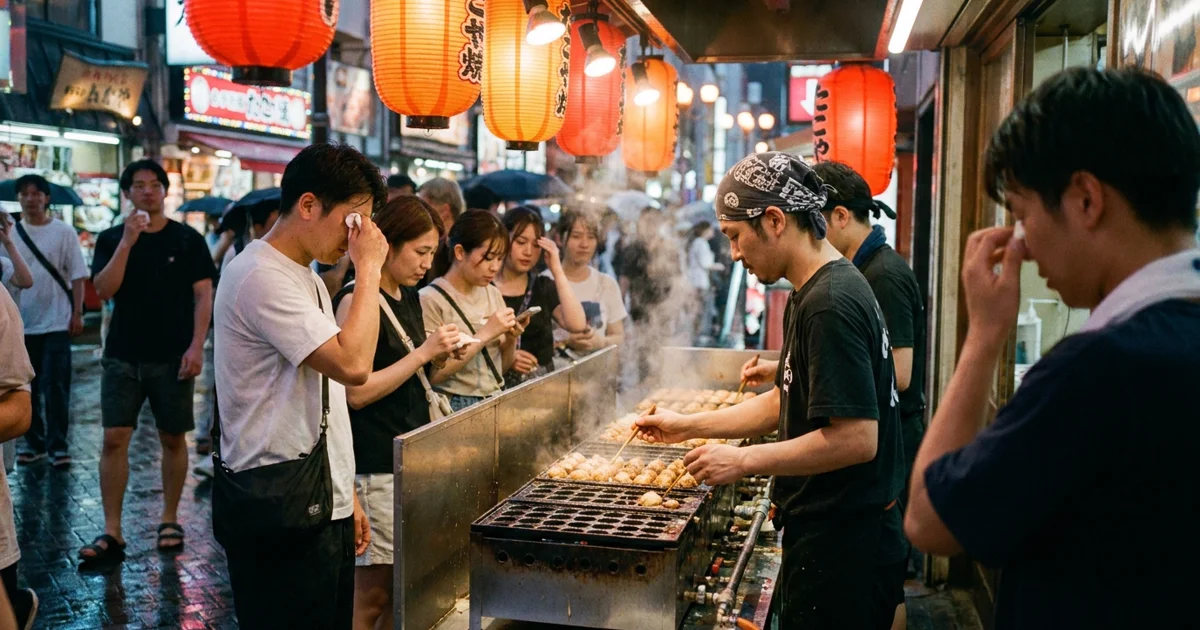
Dotonbori is touristy, but skipping it on a first visit is trying too hard. Go in the early evening, when the lights come on and the energy builds. Take the classic canal walk, look for takoyaki stalls and do not feel pressured to eat at the restaurant with the biggest line. Osaka has too much good food for panic choices.
For dinner, choose one main food experience instead of grazing randomly until you feel sick. Okonomiyaki is a strong first-night pick because it feels local, social and filling. If you prefer something quicker, takoyaki plus ramen works well.
Tip: In summer, make your first night about atmosphere rather than distance. You will enjoy Osaka more if you arrive gently instead of trying to prove stamina.
Day 2: Osaka Castle, Tenma and Umeda
Start early at Osaka Castle Park. The castle itself is a reconstruction, but the park, moat and city views make the stop worthwhile. In summer, morning is the right move because shade matters and tour groups build later.
After the castle, head toward Tenma for lunch or early afternoon wandering. Tenma has a more local food feel than Dotonbori, with small restaurants, izakayas and market energy. It is a good neighborhood for travelers who want Osaka beyond the postcard.
Use the hottest part of the afternoon for Umeda. This is where air conditioning becomes your friend. Explore department store basements, coffee shops, shopping complexes and observation decks if the weather is clear. Umeda is not the old romantic version of Japan, but it is extremely useful and very Osaka.
This is where Toma can improve the day. Instead of treating Osaka Castle, Tenma and Umeda as separate pins, the app can build a personalized route that respects heat, transit and meal timing. It is the difference between a list of attractions and a day that actually flows.
Day 3: Shinsekai, Kuromon Market and a slower afternoon
Shinsekai is one of Osaka’s most distinctive neighborhoods. It is bright, retro, slightly chaotic and built around Tsutenkaku Tower. Go earlier in the day if you want easier photos and less crowd pressure. The classic food here is kushikatsu, skewered and fried food that is best enjoyed casually.
From there, move toward Kuromon Market. It is popular with visitors, and some stalls are priced accordingly, but it is still useful for tasting seafood, fruit, snacks and quick bites in one compact area. The key is to treat it as a food walk, not a cheap lunch guarantee.
In the afternoon, slow down. Visit a cafe, rest at the hotel or choose one indoor museum or shopping area. This is not wasted time. In Osaka summer, the travelers who plan breaks get better evenings.
For dinner, return to a neighborhood you liked or try something more specific: ramen in Namba, izakaya hopping in Tenma, or a reservation for a better okonomiyaki place. Do not leave all meals to chance. Osaka rewards wandering, but a little structure helps.
Day 4: Choose Nara, Kyoto or Himeji as your day trip
Osaka’s best advantage is how easily it connects to other Kansai highlights. For a 4-day itinerary, pick one day trip, not three. Trying to squeeze Nara, Kyoto and Himeji into a short Osaka stay turns the base into a train station.
Nara is the easiest choice for first-timers. The deer, temples and park setting create a very different day without complicated logistics. Go early, see Todai-ji, walk through the park and return to Osaka for dinner.
Kyoto is tempting, but it deserves more than one rushed day. If you only have a day, pick one area, such as Higashiyama, Arashiyama or Fushimi Inari, and accept that you are sampling, not “doing Kyoto.” Start early because summer crowds and heat are real.
Himeji is best if you love castles and clean day-trip structure. Himeji Castle is one of Japan’s great historic sites, and the trip from Osaka is straightforward. It is less food-focused than Nara or Kyoto, but it feels memorable and efficient.
What to eat without turning the trip into a checklist
Osaka’s food reputation is deserved, but the best approach is selective. You do not need to eat every famous dish in one day. Spread them out so each meal still feels enjoyable.
Prioritize these:
- Takoyaki for a quick street-food moment
- Okonomiyaki for a proper sit-down Osaka meal
- Kushikatsu in Shinsekai or a casual izakaya setting
- Ramen or udon when you want something simple and comforting
- Depachika food halls for snacks, fruit, sweets and train picnic supplies
The phrase often associated with Osaka is kuidaore, eating until you drop. Fun idea, terrible literal travel strategy. Eat well, walk a little, drink water and remember that tomorrow has breakfast.
How to handle summer heat in Osaka
Summer in Osaka can be heavy. Humidity changes how ambitious you should be. The winning rhythm is morning sightseeing, indoor afternoon, evening food. If your plan ignores heat, the city will correct you quickly.
Carry a small towel, refill water often and use convenience stores as recovery points. Japan makes this easy. You are rarely far from cold drinks, snacks, restrooms or air conditioning.
Also consider hotel location more carefully in summer. A place that is “only 18 minutes from the station” can become annoying when you repeat that walk twice a day in heat. Stay closer to transit than you think you need.
Budget and transit basics
Osaka can be cheaper than Tokyo, but it is not automatically cheap. Hotels rise during busy periods, popular restaurants can add up and day trips increase transport costs. The good news is that food variety makes budgeting flexible. You can eat very well from casual restaurants, markets and convenience stores.
For transit, you will use a mix of subway, JR lines and private railways depending on your day trips. Do not over-optimize passes before you know your route. Many travelers buy a pass because it feels productive, then build the itinerary around the pass instead of the other way around.
Map your actual days first. If the pass saves money and reduces friction, buy it. If not, use an IC card and move on. Your time is worth something too.
Using Toma to make the itinerary personal
This 4-day plan gives you a strong structure, but the best Osaka trip depends on your priorities. A food-first traveler should spend more time in Tenma, Namba and depachika halls. A culture-first traveler may want Himeji or Kyoto. A first Japan trip with kids may need shorter evenings and more hotel breaks.
Toma turns that into a personalized AI itinerary instead of a generic map. It can balance neighborhoods, day trips, meal timing and rest windows, then help you follow the plan while you are there. After the trip, Travel Wrapped gives you a recap of the moments that made it yours.
That matters in Osaka because the city is less about one must-see monument and more about accumulated texture: the first takoyaki bite, the station maze you finally understood, the alley you found by accident, the dinner that became the story.
Final take: Osaka is better when you do less, better
A great Osaka summer itinerary is not about doing every famous thing. It is about choosing a smart base, eating intentionally, respecting the heat and using the city as a launchpad for one excellent Kansai day trip.
Four days is enough for Namba, Dotonbori, Osaka Castle, Tenma, Shinsekai, Umeda and one day trip if you pace it well. It is not enough for every neighborhood, every market and every nearby city. That is fine.
Plan the trip like a traveler, not a collector. Osaka rewards appetite, curiosity and a schedule with room to breathe.